Q70 · Practice questionComplex familiar5 marks
QUESTION 70 (5 marks)
Use glycine , alanine and serine to form the tripeptide Gly–Ala–Ser.
a) Draw the condensed structural formula with Gly at the N-terminus. [3 marks]
b) State the number of peptide bonds and water molecules released. [2 marks]
WORKED SOLUTION
5 marksPractice marking scheme
; two peptide bonds and two water molecules.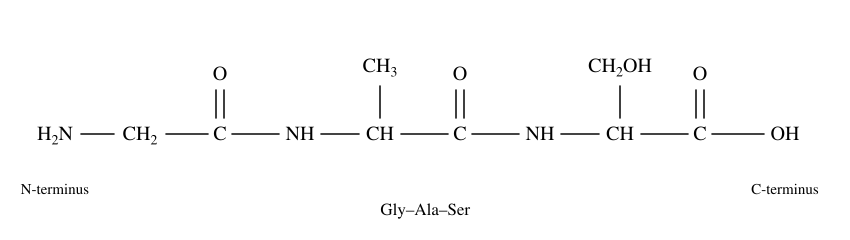
The carboxyl group of Gly links to the amino group of Ala, then Ala to Ser. Each link removes H from an amino group and OH from a carboxyl group.
- Correct Gly residue/N-terminus. [1 marks]
- Correct Ala and Ser residue sequence. [1 marks]
- Correct two CONH linkages and C-terminus. [1 marks]
- States two peptide bonds. [1 marks]
- States two waters released. [1 marks]
Practice question aligned to the current QCAA syllabus; review the worked solution and marking criteria.
View the QCAA syllabusHow many marks did you earn?
Compare your working with the guide above.