QUESTION 7 (4 marks)
Polylactic acid (PLA) is a biodegradable plastic that can be decomposed by microorganisms into carbon dioxide (CO2), water and biomass.
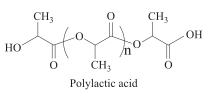
a) Explain how the biodegradability of polylactic acid is related to its structure.
[2 marks]
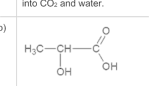
b) Describe, using a diagram, the structural formula of lactic acid.
[2 marks]

Note: If you make a mistake in the diagram, cancel it by ruling a single diagonal line through your work and use the additional response space at the back of this question and response book.
QCAA guide · typeset solution
QCAA sample response and mark allocation
7a) | Polylactic acid contains an ester linkage. Microorganisms produce enzymes that can hydrolyse the ester linkage to decompose PLA into CO2 and water. | • explains that polylactic acid contains an ester linkage [1 mark] • explains that the ester linkage can be hydrolysed [1 mark] |
7b) | • describes the location of COOH group [1 mark] • describes the location of the OH group [1 mark] |
QCAA sample response and marking criteria reproduced from the official guide.
Compare your working with the guide above.