QUESTION 6 (9 marks)
Six molecules were selected to investigate functional groups and the arrangement of atoms.
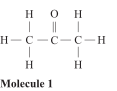
H H
H H H
O
H C C
H C C Cl
C
C
O H
H H
H H H
Molecule 2
Molecule 3
H
H H H
H3C
H
H C N
H C N
C
C
C
C H
Cl
H
H
H H
Molecule 4
Molecule 5
Molecule 6
a) Identify a molecule that contains a carbonyl functional group.
[1 mark]
b) Identify a geometric isomer of molecule 6 and apply IUPAC rules to name the geometric isomer.
[1 mark]
IUPAC name:
c) Describe, using a balanced chemical equation, how molecule 4 can be converted to molecule 5. Include all relevant reagents.
[2 marks]
d) Complete the diagram to explain how molecule 3 can be converted into molecule 1 and molecule 2.
[5 marks]
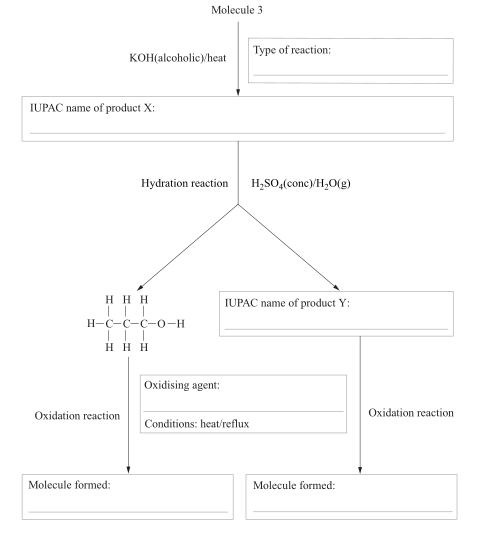
Note: If you make a mistake in the diagram, cancel it by ruling a single diagonal line through your work and use the additional response space at the back of this question and response book.
QCAA guide · typeset solution
QCAA sample response and mark allocation
6a) | Molecule 1 | • identifies molecule 1 or molecule 2 [1 mark] |
6b) | cis-1-chloropropene | • determines the IUPAC name of a geometric isomer [1 mark] |
6c) | Pt CH CN(l) + 2H (g) CH CH NH (g) 3 2 3 2 2 | • determines balanced chemical equation [1 mark] • identifies appropriate catalyst [1 mark] |
6d) | Type of reaction: elimination IUPAC name of product X: propene IUPAC name of product Y: propan-2-ol K Cr O /H+ Oxidising agent: 2 2 7 Propanol forms molecule 2 and propan-2-ol forms molecule 1. | • identifies type of reaction is elimination [1 mark] • determines product X is propene [1 mark] • determines product Y is propan-2-ol [1 mark] • identifies oxidising agent [1 mark] • determines that propanol forms molecule 2 and propan-2-ol forms molecule 1 [1 mark] |
QCAA sample response and marking criteria reproduced from the official guide.
Compare your working with the guide above.