QUESTION 60 (6 marks)
Large fish are removed from the food web. Assume feeding links remain unchanged and food, rather than habitat space, limits the grazing snails and insect larvae.
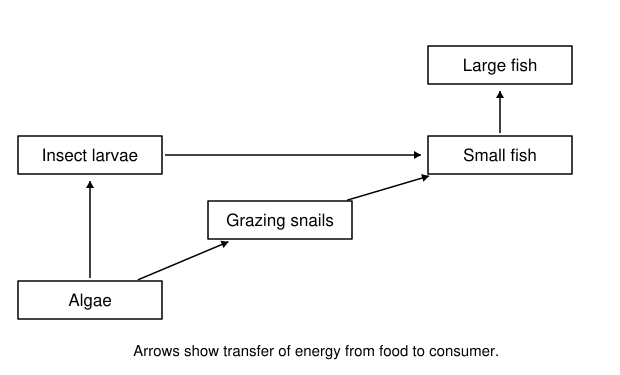
a) Predict the initial change in small-fish abundance and explain why. [2 marks]
b) Predict a resulting change in algae abundance, tracing two intermediate changes in the web. [3 marks]
c) State one reason the long-term response could differ from this prediction. [1 marks]
Practice marking scheme
Answer
a) Small fish may increase as predation falls. b) Increased small fish reduce snails and larvae; reduced grazing can allow algae to increase. c) For example, resource limitation or altered feeding behaviour can change the response.
Working
Removing large fish releases small fish from predation. More small fish can impose stronger predation on both grazing snails and insect larvae. Declining grazer abundance reduces consumption of algae, potentially increasing algal biomass. This trophic cascade is a prediction under the stated assumptions; long-term changes in resources, disease, immigration or behaviour may modify it.
Marking criteria
- Predicts an increase in small fish. [1 mark]
- Explains reduced predation. [1 mark]
- Predicts reduced snails and/or larvae through increased predation. [1 mark]
- Links fewer grazers to reduced algal consumption. [1 mark]
- Predicts increased algae. [1 mark]
- Identifies a biologically plausible modifying factor. [1 mark]
Practice question aligned to the current QCAA syllabus; review the worked solution and marking criteria.
View the QCAA syllabusCompare your working with the guide above.