QUESTION 58 (5 marks)
The graph shows percentage cover of three plant groups after a disturbance. Cover values describe each group separately and may overlap vertically.
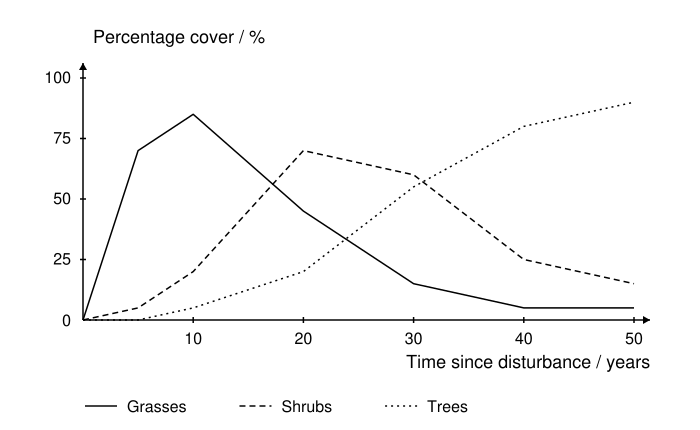
a) Describe the order of dominance through time. [2 marks]
b) Explain how a change in light availability could contribute to the decline in grass cover. [2 marks]
c) State why this graph does not distinguish primary from secondary succession. [1 marks]
Practice marking scheme
Answer
a) Grasses dominate early, shrubs dominate at intermediate times, and trees dominate later. b) Taller plants shade grasses and alter competitive conditions. c) The initial soil condition is not given.
Working
Grass cover peaks first, followed by shrub cover; tree cover becomes greatest later. As shrubs and trees become taller and denser, they can intercept light above the grasses, reducing light at ground level and suppressing grass growth. Primary versus secondary succession depends on whether established soil was present initially, which is not shown.
Marking criteria
- Identifies early grass dominance. [1 mark]
- Identifies shrubs at intermediate times and trees later. [1 mark]
- Explains interception of light by taller plants. [1 mark]
- Links reduced ground-level light to lower grass growth/competitive success. [1 mark]
- Recognises that the initial presence of soil is unspecified. [1 mark]
Practice question aligned to the current QCAA syllabus; review the worked solution and marking criteria.
View the QCAA syllabusCompare your working with the guide above.