QUESTION 52 (5 marks)
Researchers remove a predatory sea star from one experimental reef plot. A similar plot is left unchanged. Initial species richness is 12 in both. After one year, results are as shown.
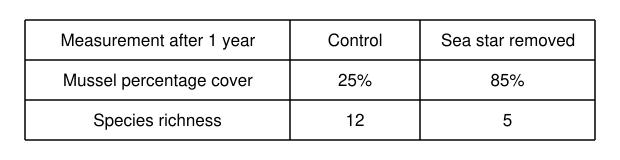
a) Describe the effect of sea-star removal on the community, using both measurements. [2 marks]
b) Infer why the sea star may be a keystone species. [2 marks]
c) Explain why the unchanged plot is useful when interpreting the result. [1 marks]
Practice marking scheme
Answer
a) Removal is associated with greater mussel cover and lower richness. b) The sea star may prevent mussel dominance and maintain community diversity. c) The control helps distinguish removal effects from background changes.
Working
Mussel cover rises to 85% in the removal plot, compared with 25% in the control; richness falls to 5 rather than remaining near 12. Predation may normally limit a strong competitor, allowing other species to persist. A large community effect from removing one species supports a keystone role. The control provides a comparison for environmental changes that occur in both plots.
Marking criteria
- Uses the cover data to identify greater mussel dominance after removal. [1 mark]
- Uses the richness data to identify lower diversity after removal. [1 mark]
- Explains a role in limiting a dominant competitor. [1 mark]
- Links the disproportionate community effect to a keystone role. [1 mark]
- Explains the purpose of the unchanged comparison plot. [1 mark]
Practice question aligned to the current QCAA syllabus; review the worked solution and marking criteria.
View the QCAA syllabusCompare your working with the guide above.