QUESTION 48 (6 marks)
The diagram shows selected nitrogen-cycle transformations. Letters represent biological processes.
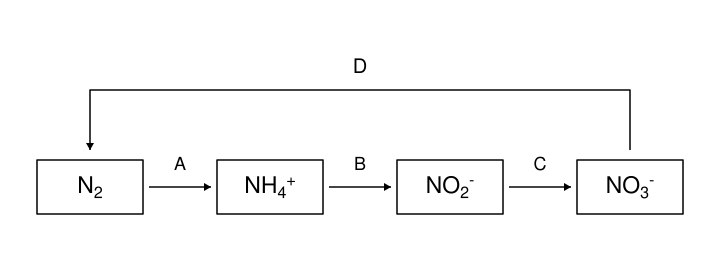
a) Name processes A and D. [2 marks]
b) Name the overall process represented by B and C and identify the type of organisms that perform it. [2 marks]
c) Explain how decomposers return nitrogen from dead leaves to the pool labelled NH₄⁺. [2 marks]
Practice marking scheme
Answer
a) A: nitrogen fixation; D: denitrification. b) Nitrification by nitrifying microorganisms. c) Decomposition releases ammonium from organic nitrogen compounds.
Working
Nitrogen-fixing microorganisms convert atmospheric N₂ to ammonia/ammonium. Nitrifying microorganisms oxidise ammonium to nitrite and then nitrate. Denitrifying microorganisms reduce nitrate to nitrogen gases, returning nitrogen to the atmosphere. During decomposition, organic nitrogen in substances such as proteins is mineralised to ammonium (ammonification).
Marking criteria
- Names A as nitrogen fixation. [1 mark]
- Names D as denitrification. [1 mark]
- Names B/C as nitrification. [1 mark]
- Identifies nitrifying bacteria or other nitrifying microorganisms. [1 mark]
- Identifies organic nitrogen in dead leaves as the source. [1 mark]
- Describes its conversion/release as ammonium through decomposition. [1 mark]
Practice question aligned to the current QCAA syllabus; review the worked solution and marking criteria.
View the QCAA syllabusCompare your working with the guide above.