QUESTION 26 (6 marks)
The diagram shows energy flow through an ecosystem. Values are in kJ m−2 year−1. Shaded boxes
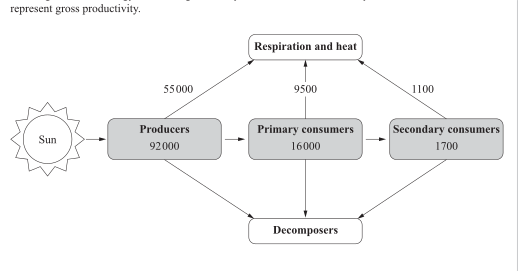
a) Calculate the efficiency of energy transfer between primary and secondary consumers. Show your working.
[2 marks]
b) Determine the amount of energy lost to decomposers at the producer level. Show your working.
[2 marks]
c) Describe two ways energy is transformed in this ecosystem.
[2 marks]
QCAA guide · typeset solution
QCAA sample response and mark allocation
26a) | • determines transfer efficiency [1 mark] • provides appropriate working [1 mark] | |
26b) | • determines 21 000 [1 mark] • provides appropriate working [1 mark] | |
26c) | Primary producers convert solar energy into chemical energy in the form of glucose through photosynthesis. At each level of the food chain some chemical energy is transformed into heat energy as organisms use it to drive their biochemical processes (respiration). | • describes one way energy is transformed [1 mark] • describes a second way energy is transformed [1 mark] |
QCAA sample response and marking criteria reproduced from the official guide.
Compare your working with the guide above.