QUESTION 6 (5 marks)
An environmental report identified overexploitation, habitat destruction and pollution as human activities affecting biodiversity in Australia. The tables show the estimated impact of each activity in 2011 and 2016.
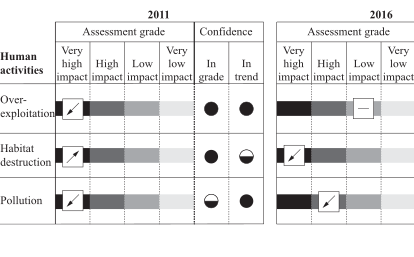
Confidence
In In trend grade
Recent trends | Grade | Confidence |
ImprovingGetting worseStable | Very low impact: Few, if any, species and/or ecosystems are suffering substantial adverse effects from this pressure | Adequate: Adequate high-quality evidence and high level of consensus |
Low impact: A small proportion of species and/or ecosystems are suffering substantial adverse effects from this pressure | Somewhat adequate: Adequate high-quality evidence or high level of consensus | |
High impact: A significant proportion of species and/or ecosystems are suffering substantial adverse effects from this pressure | Limited: Limited evidence orlimited consensus | |
Very high impact: A large proportion of species and/or ecosystems are suffering substantial adverse effects from this pressure | Very limited: Limited evidence and limited consensus |










a) Explain how one human activity identified in the tables could reduce biodiversity.
[1 mark]
b) Predict which human activities will have the highest and lowest impact on biodiversity in 2023. Explain your reasoning using evidence from the tables.
[4 marks]
Highest impact:
Lowest impact:
QCAA guide · typeset solution
QCAA sample response and mark allocation
6a) | Habitat destruction: organisms that previously inhabited the site are displaced or killed, which could disrupt food chains | • explains how a human activity reduces biodiversity [1 mark] |
6b) | Highest impact: Habitat destruction In 2016, there was high-quality evidence and a high level of consensus that habitat destruction was causing a large proportion of species and/or ecosystems to suffer substantial adverse effects, and that the impact was deteriorating. This is in contrast to 2011, when the effects of the impact were improving. Lowest impact: Overexploitation In 2016, there was adequate high-quality evidence to suggest that overexploitation was affecting only a small proportion of species and/or ecosystems. This was an improvement from 2011 where there was high-quality evidence (and consensus) that a large proportion of species were affected. This implies that measures to improve overexploitation have been implemented since 2011. | • predicts the highest impact will be from habitat destruction [1 mark] • explains the prediction using evidence [1 mark] • predicts the lowest impact will be from overexploitation [1 mark] • explains the prediction using evidence [1 mark] |
QCAA sample response and marking criteria reproduced from the official guide.
Compare your working with the guide above.