Q28 · Practice questionTechnology-freeSimple familiar4 marks
QUESTION 28 (4 marks)
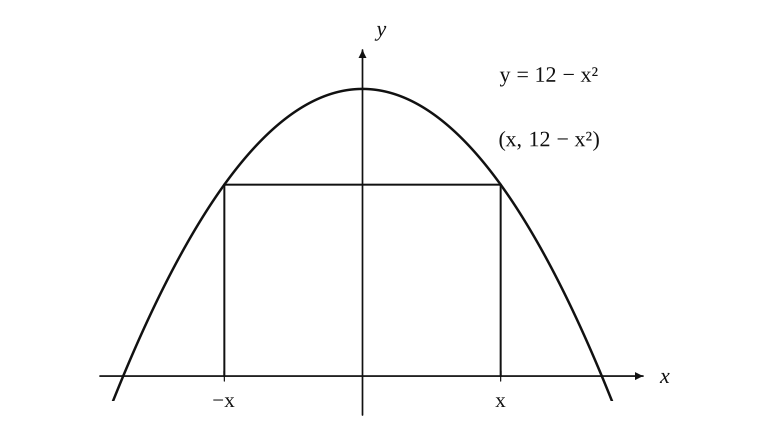
A rectangle is inscribed symmetrically under the parabola and above the -axis, as shown. The upper right corner is , where . Determine the maximum possible area of the rectangle.
WORKED SOLUTION
4 marksPractice marking scheme
ANSWER
square units.
Worked solution
The width is and height is , so . Then gives . Since changes from positive to negative, this gives a maximum. .
Forms .
Differentiates and solves to obtain .
Establishes that the stationary value is a maximum.
Determines the maximum area as square units.
Practice question aligned to the current QCAA syllabus; review the worked solution and marking criteria.
View the QCAA syllabusHow many marks did you earn?
Compare your working with the guide above.