QUESTION 24 (4 marks)
The pKw of pure water at various temperatures was determined, to investigate the effect of temperature on the equilibrium position of self-ionisation of water. The results are shown.
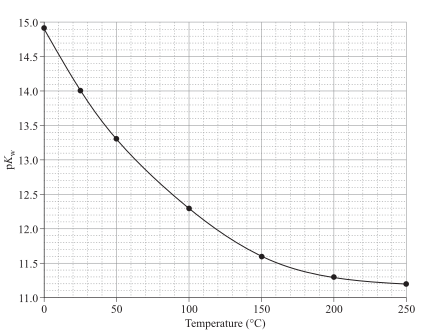
Explain the effect of increasing the temperature on the pH of water by considering the enthalpy of the forward reaction.
QCAA guide · typeset solution
QCAA sample response and mark allocation
24 | As temperature increases, pKw decreases (Kw increases), indicating that equilibrium shifts towards the products. Therefore, the forward reaction is endothermic and increasing the temperature increases [H+] and decreases pH. | • identifies that pKw decreases as temperature increases [1 mark] • determines that the forward reaction is endothermic [1 mark] • explains that increasing temperature shifts the equilibrium toward products [1 mark] • explains that increasing temperature decreases pH [1 mark] |
QCAA sample response and marking criteria reproduced from the official guide.
Compare your working with the guide above.