QUESTION 75 (5 marks)
The diagram shows expression of a hypothetical HOX gene in six segments of an embryo. In this species, the gene helps establish segment identity. Shading represents expression, not a DNA-sequence difference.
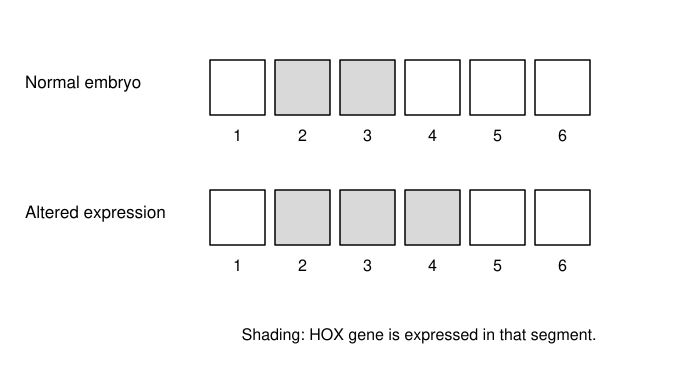
a) Describe the change in the expression domain. [1 marks]
b) Explain how this change could alter morphology. [3 marks]
c) Explain why an expression change in a HOX gene can affect several downstream genes. [1 marks]
Practice marking scheme
Answer
a) Expression extends into segment 4. b) Segment 4 may develop an inappropriate identity because HOX transcription-factor activity changes which developmental genes are expressed. c) A transcription factor can regulate multiple target genes.
Working
HOX genes encode transcription factors involved in regional identity during development. Expression in an additional segment can change the set of developmental target genes activated or repressed there, potentially changing its structures or identity. The precise resulting structure cannot be specified from the expression map alone. One regulatory protein can affect multiple target genes, producing broader consequences than a change in a single structural protein.
Marking criteria
- Identifies additional expression in segment 4. [1 mark]
- Identifies the HOX product as a transcription factor. [1 mark]
- Links altered factor activity to changed developmental gene expression. [1 mark]
- Predicts an altered/inappropriate segment identity or structure without inventing a specific unsupported structure. [1 mark]
- Explains that one factor can regulate several target genes. [1 mark]
Practice question aligned to the current QCAA syllabus; review the worked solution and marking criteria.
View the QCAA syllabusCompare your working with the guide above.