QUESTION 63 (5 marks)
The replication fork moves to the right. Template-strand ends are labelled. Arrows on new DNA indicate synthesis direction.
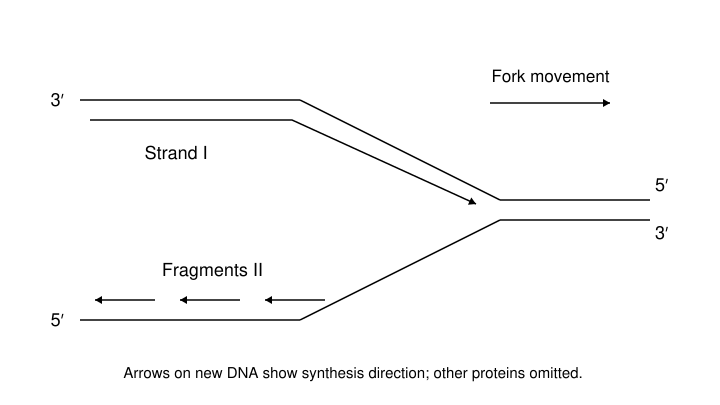
a) Identify strand I and fragments II as leading or lagging DNA. [2 marks]
b) Explain why the two new strands are synthesised differently. [2 marks]
c) Name the enzyme that joins the fragments after synthesis. [1 marks]
Practice marking scheme
Answer
a) I: leading strand; II: lagging-strand fragments. b) DNA polymerase extends DNA only 5′ to 3′, while templates are antiparallel. c) DNA ligase.
Working
The leading strand can be extended continuously in the direction of fork movement. On the antiparallel template, new lagging DNA is made in shorter 5′ to 3′ sections away from the fork as additional template becomes exposed. DNA ligase seals the backbone between adjacent fragments after processing.
Marking criteria
- Identifies I as leading. [1 mark]
- Identifies II as lagging fragments. [1 mark]
- States that DNA synthesis proceeds only 5′ to 3′. [1 mark]
- Links antiparallel templates and fork movement to discontinuous synthesis. [1 mark]
- Names DNA ligase. [1 mark]
Practice question aligned to the current QCAA syllabus; review the worked solution and marking criteria.
View the QCAA syllabusCompare your working with the guide above.