QUESTION 61 (6 marks)
The diagram represents a short fragment of double-stranded DNA. Numbers 1–4 indicate structures or bonds.
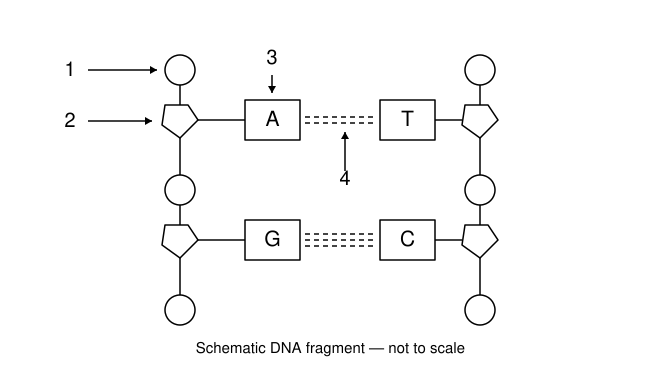
a) Identify structures 1, 2 and 3, and bond type 4. [4 marks]
b) Explain how complementary base pairing assists accurate DNA replication. [2 marks]
Practice marking scheme
Answer
a) 1: phosphate; 2: deoxyribose sugar; 3: nitrogenous base; 4: hydrogen bonds. b) Each existing strand provides a template, with specific pairing determining the complementary sequence.
Working
The backbone alternates phosphate and deoxyribose. Nitrogenous bases project towards the other strand and pair specifically: A with T, and G with C. Hydrogen bonds hold complementary bases together. After strand separation, each parental sequence acts as a template for addition of complementary nucleotides to a new strand.
Marking criteria
- Identifies 1 as phosphate. [1 mark]
- Identifies 2 as deoxyribose. [1 mark]
- Identifies 3 as a nitrogenous base. [1 mark]
- Identifies 4 as hydrogen bonds. [1 mark]
- States that a parental strand is a template. [1 mark]
- Links specific complementary pairing to the new sequence. [1 mark]
Practice question aligned to the current QCAA syllabus; review the worked solution and marking criteria.
View the QCAA syllabusCompare your working with the guide above.