QUESTION 9 (10 marks)
The diagram shows key stages of gene expression.
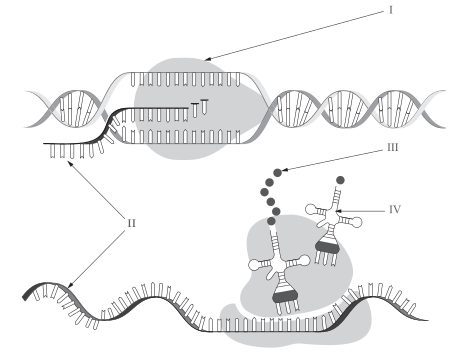
a) Identify structures I, II and III.
[3 marks]
I:
II:
III:
b) Describe the role of structure IV and explain how it carries out this function.
[3 marks]
c) Describe two ways gene expression is regulated.
[2 marks]
d) Explain two reasons why genetic mutations do not always affect the phenotype of an individual.
[2 marks]
QCAA guide · typeset solution
QCAA sample response and mark allocation
9a) | I. RNA polymerase II. mRNA III. polypeptide | • identifies I as RNA polymerase [1 mark] • identifies II as mRNA [1 mark] • identifies III as polypeptide [1 mark] |
9b) | The role of tRNA is to transport amino acids from the cytoplasm to the ribosome in the order specified by the mRNA. Each tRNA carries a specific amino acid, based on its anticodon sequence. The anticodon recognises and binds to its complementary sequence on the mRNA molecule. This allows amino acids to be connected in the order specified by the mRNA sequence. | • describes - the role of tRNA [1 mark] - the role of anticodons [1 mark] - tRNA-amino acid specificity [1 mark] |
9c) | Transcription factors bind to sections of DNA near the gene being expressed and either promote or inhibit the binding of RNA polymerase. Epigenetic tags affect the degree of DNA coiling. Genes in sections of DNA that are tightly bound are usually not expressed because the enzymes involved in transciption can’t access them. | • describes one way gene expression is regulated [1 mark] • describes a second way gene expression is regulated [1 mark] |
9d) | Mutations may occur in non-coding sections of DNA (introns), meaning the resulting polypeptide will not be affected. Point mutations may not change the amino acid the triplet codes for, meaning the resulting polypeptide is unaffected (silent mutation). | • provides one reason [1 mark] • provides a second reason [1 mark] |
QCAA sample response and marking criteria reproduced from the official guide.
Compare your working with the guide above.