Q83 · Practice questionComplex unfamiliar5 marks
QUESTION 83 (5 marks)
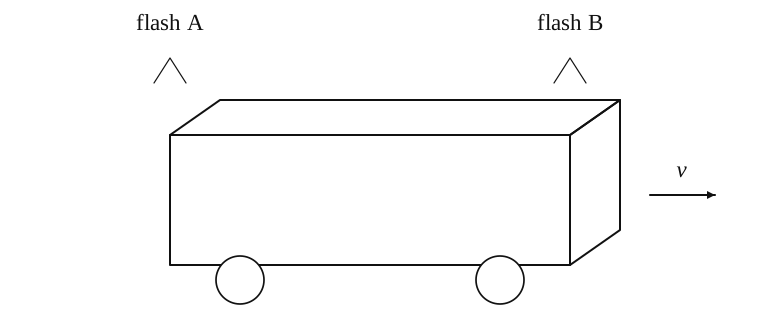
Two flashes occur simultaneously at the front and rear of a train according to an observer standing beside the track. The train moves to the right. Explain which flash reaches an observer at the midpoint of the train first and what this implies about simultaneity in the train frame.
WORKED SOLUTION
5 marksPractice marking scheme
ANSWER
The front flash reaches the train observer first. Because light speed is in the train frame and the observer is equidistant from the ends in that frame, the train observer concludes that the front flash occurred earlier than the rear flash.
Worked solution
In the track frame, the flashes are emitted simultaneously. While the light travels, the train midpoint moves right: it moves toward the light coming from the front and away from the light coming from the rear. Therefore the front flash reaches the train midpoint first. The train observer also measures light to move at in both directions. Since the train observer is at the midpoint and thus equally distant from the two ends in the train frame, unequal arrival times cannot be attributed to unequal light speeds or distances. The train observer therefore concludes that the front flash was emitted earlier. This demonstrates that simultaneity of separated events is frame-dependent.
Identifies front flash arrives first.
Explains motion of midpoint relative to the two light pulses.
Uses invariance of light speed.
Uses equal distances in train frame.
States frame-dependence of simultaneity.
Practice question aligned to the current QCAA syllabus; review the worked solution and marking criteria.
View the QCAA syllabusHow many marks did you earn?
Compare your working with the guide above.