QUESTION 6 (4 marks)
Sickle-cell anaemia is an autosomal recessive condition that reduces the ability of red blood cells to carry oxygen. This is usually considered detrimental; however, individuals who are heterozygous for the trait may be less prone to the infectious disease malaria. These maps show the distribution of malaria and frequency of the sickle-cell anaemia allele in Africa.
Not to scale
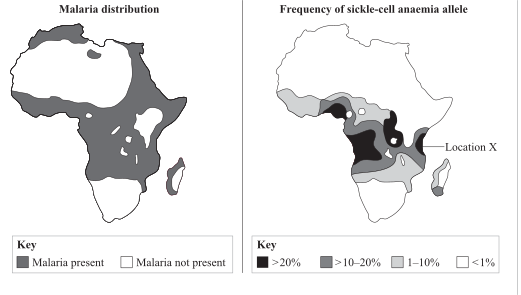
This table shows the genotypes of individuals living at location X.
Genotype | Number of individuals |
AA | 830 |
Aa | 540 |
aa | 23 |
a) Calculate the frequency of the recessive allele, a, in the population at location X. Show your working.
[2 marks]
b) Identify evidence for the sickle-cell anaemia allele being advantageous for individuals living where malaria is prevalent. Explain your reasoning.
[2 marks]
QCAA guide · typeset solution
QCAA sample response and mark allocation
6a) | • calculates frequency of allele a [1 mark] • provides appropriate working [1 mark] | |
6b) | Frequencies of the sickle-cell anaemia allele are high (1–20%) in the middle of the continent, where malaria is present, but low (<1%) in other areas. This suggests positive selection for the allele has occurred in these areas, causing it to become more prevalent. This is characteristic of an allele that is advantageous. | • identifies appropriate evidence [1 mark] • explains their reasoning [1 mark] |
QCAA sample response and marking criteria reproduced from the official guide.
Compare your working with the guide above.