QUESTION 28 (3 marks)
In 1950, the myxoma virus was released into Australian pest rabbit populations to reduce their numbers. The resulting disease, myxomatosis, initially wiped out 95% of the rabbit population; however, it quickly became less effective as a population control measure. This graph shows the frequency of myxomatosis resistance in Australia’s rabbit population from 1949 to 1956.
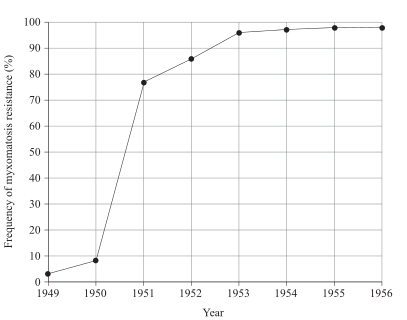
Use evidence from the graph and the principles of natural selection to explain how myxomatosis became ineffective as a population control measure.
QCAA guide · typeset solution
QCAA sample response and mark allocation
28 | The introduction of the myxoma virus conferred a selective advantage on the myxomatosis-resistant phenotype. Myxomatosis-resistant rabbits had an increased chance of surviving to reproduce and pass on the trait. This led to an increase in the frequency of this phenotype in the population from approximately 9% in 1950 to approximately 96% in 1953. After 1953, most of the remaining rabbits possessed the myxomatosis-resistant phenotype, so the disease was no longer effective at reducing rabbit numbers. | • recognises that the myxomatosis-resistant phenotype provided a selective advantage [1 mark] • uses evidence from the graph to establish that this caused myxomatosis resistance to increase in the population [1 mark] • concludes that myxomatosis became less effective as the percentage of myxomatosis- resistant rabbits increased [1 mark] |
QCAA sample response and marking criteria reproduced from the official guide.
Compare your working with the guide above.